Blog

  • How to Build a Portfolio Without Clients

    How to Build a Portfolio Without Clients | Future of Work

    One of the biggest lies beginners believe is this: “I need clients before I can build a portfolio.” Wrong. That mindset traps people in a loop: no portfolio, no proof, no opportunities, no experience, repeat.

    Here’s the reality: Most clients do not care whether your work was “real” or self-initiated. They care whether you can solve problems, your work looks credible, and you understand results. A strong self-created portfolio will beat a weak client portfolio every time. Especially in today’s digital economy. The internet rewards visible proof of skill. Not excuses.

    So if you’re waiting for permission before building your portfolio, you’re already behind.

    First: Understand What a Portfolio Actually Is

    Most people think a portfolio is just pretty graphics, random projects, or screenshots. That’s amateur thinking. A real portfolio is proof. Proof that you understand a problem, you can create solutions, and you know how to think. Your portfolio is your digital evidence. It answers one question:

    “Why should anyone trust you?” That’s it.

    The Biggest Beginner Mistake

    Creating fake-looking work with no context. For example: random logo dumps, generic social media flyers, copied UI screens, meaningless redesigns, or AI-generated clutter. That kind of portfolio screams: “I watched tutorials but don’t understand real-world thinking.” Clients want confidence. Not decoration.

    So How Do You Build a Portfolio Without Clients?

    You create proof strategically. Here’s how.

    1. Create Spec Projects

    This is the fastest path. A spec project is a fake project built like a real one. You choose a brand, a business, a creator, or a problem, then create work around it.

    Examples:

    • redesign a restaurant’s Instagram
    • create branding for a fictional startup
    • build a landing page for a fitness app
    • write an email campaign for a skincare brand
    • create TikTok content ideas for a real company

    The key is realism. Make it feel like professional work. Not student homework.

    2. Solve Real Problems Publicly

    This is where most people refuse to do the work. Instead of saying “I’m a social media strategist,” prove it. Find struggling brands online and create content improvements, redesign concepts, growth ideas, better headlines, or campaign breakdowns. Then post your analysis publicly.

    This does two things: builds authority, attracts opportunities. You stop looking like a beginner. You start looking like a thinker.

    3. Document Your Process

    Most portfolios only show the final result. That’s weak. The process matters. Show research, strategy, sketches, thinking, before/after comparisons, and decision-making. Because clients are not just buying output. They’re buying confidence in your thinking.

    A designer who explains strategy looks more valuable than one who only posts visuals. Same with writers, marketers, developers, editors, and strategists.

    4. Build Around a Niche

    General portfolios struggle. Focused portfolios convert better. Instead of “I do everything,” try: fitness brand designer, startup video editor, tech copywriter, creator strategist, SaaS UI designer, LinkedIn ghostwriter, real estate social media manager. Niche positioning makes people remember you faster. Specificity creates clarity.

    5. Use Existing Brands Carefully

    This works extremely well if done correctly. You can redesign or improve Spotify campaigns, Netflix social media, Nike ads, local business branding, startup landing pages, creator content systems. But do NOT just copy existing work. That’s lazy. Add strategic improvement.

    Ask: What would I do differently? What’s missing? How could this perform better? How would I modernize this? That’s where value is created.

    6. Turn Your Own Brand Into a Portfolio

    This is massively underrated. Your LinkedIn, Instagram, TikTok, X/Twitter, website, or newsletter can become proof of skill. If you claim to understand branding, content, design, storytelling, growth, or audience building, your own presence should reflect it. A weak online presence destroys credibility fast. Your brand should silently answer: “Can this person actually do what they claim?”

    7. Build Case Studies — Not Just Projects

    Case studies feel professional. Projects feel unfinished. Instead of posting “Here’s a logo,” break it down: the problem, the goal, the audience, your strategy, your process, and the final result. That instantly increases perceived value. Even if the project was self-initiated.

    8. Collaborate for Experience

    You may not have paying clients yet. That’s okay. You can still gain experience by helping startups, creators, NGOs, student communities, friends with businesses, or online communities. But be strategic. Do not become free labor forever. The goal is experience, proof, testimonials, and credibility. Not exploitation.

    9. Create Personal Projects That Show Depth

    This is where real differentiation happens. Anyone can create random content. Few people create systems. Examples: build a mock brand campaign, create a full social media strategy, develop a mini app, launch a niche newsletter, create a content series, build a fictional startup ecosystem. Big projects signal ambition and thinking capacity. That matters.

    10. Stop Waiting to Feel “Ready”

    Perfectionism kills momentum. Most people delay building publicly because they fear judgment. But invisibility is worse than imperfection. Your early work may not be amazing. That’s normal. The point is progression. A visible imperfect portfolio beats hidden potential every time.


    What Makes a Portfolio Actually Stand Out?

    Not complexity. Not fancy animations. Not aesthetics alone. What stands out is clarity, positioning, thinking, storytelling, confidence, and proof of problem-solving. Your portfolio should make people think: “This person understands what they’re doing.” That’s the goal.

    A Brutal Truth Most Beginners Need to Hear

    Nobody is coming to rescue your career. Not motivation. Not luck. Not algorithms. You have to create opportunities before opportunities notice you. That means building publicly, experimenting, improving consistently, and creating proof before validation arrives. Most people wait to be chosen. Smart people position themselves to be discovered. Huge difference.

    Final Thoughts

    You do not need clients to start looking credible online. You need initiative, strategic thinking, visible proof, and consistency. The internet rewards people who show their work. So stop waiting for permission, confidence, or perfect conditions. Build anyway. Because the people getting opportunities online are often not the most talented. They’re the people whose work can actually be seen.

  • What Happens When Everyone Has AI

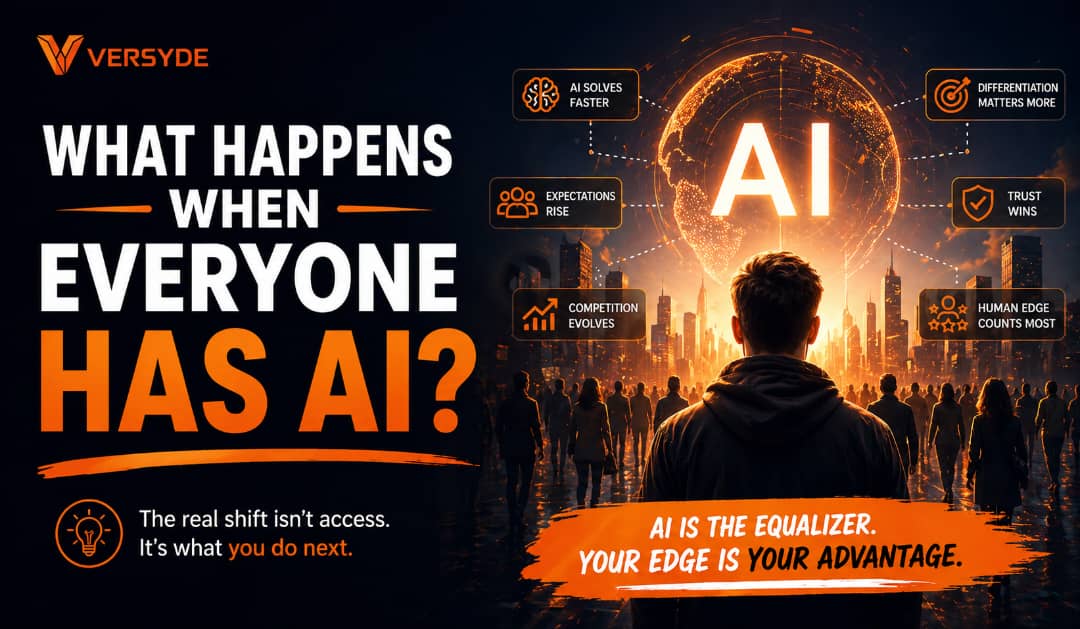
    What Happens When Everyone Has AI

    What Happens When Everyone Has AI | Future of Work

    Something strange is happening right now.

    The most powerful technology shift in decades is becoming normal faster than anyone expected.

    A few years ago, having access to advanced AI felt like an unfair advantage. Now? Millions of people can generate content, designs, code, strategies, videos, research, and business ideas in seconds.

    And this raises a dangerous question: What happens when everyone has the same tools?

    Because eventually, AI access will stop being impressive. Just like owning a smartphone, using Google, or having social media stopped being special.

    The real disruption begins when AI becomes ordinary. That’s where things get interesting. And brutal.

    AI Is Destroying Average Work First

    AI is not replacing all humans. It’s replacing predictable output. That includes generic writing, repetitive designs, basic coding, shallow research, low-level support tasks, and formulaic content.

    In simple terms: If your work looks like it can be generated in 30 seconds, you are entering dangerous territory.

    This is why so many industries are panicking. Because AI compresses execution. Things that once took days, teams, or specialized knowledge can now happen instantly.

    The internet is about to be flooded with average content, average products, average businesses, and average ideas. Which creates a new problem: Attention becomes harder to earn. Trust becomes harder to build. And originality becomes more valuable.

    The Value of “Doing” Is Decreasing

    This is the part many people still don’t understand. Execution is getting cheaper. Thinking is becoming more valuable.

    For years, people were rewarded simply for making graphics, writing posts, editing videos, building websites, or producing information. Now AI can assist with all of that. So the value shifts upward.

    The future rewards people who can think strategically, ask better questions, make better decisions, combine ideas creatively, and understand human psychology. The advantage is no longer just creation. It’s direction.

    The Internet Will Become Extremely Noisy

    We are entering the era of synthetic abundance. Meaning: infinite content, infinite opinions, infinite designs, infinite media, infinite automation. The barrier to creating online is collapsing. That sounds exciting. But it also means the internet will become crowded with low-effort output.

    You’ll see cloned brands, recycled ideas, fake expertise, AI-generated personalities, and endless content farms. The internet may become more productive — but also less trustworthy. And when trust drops, human credibility becomes premium.

    Human Taste Will Matter More Than Ever

    Ironically, AI may make human judgment more valuable. Because when everyone can generate endless output, people start asking: “What’s actually good?” That’s where taste, curation, perspective, and discernment become powerful.

    Anyone can generate 1,000 ideas. Very few people can recognize the one worth building. This is why creative directors, strategists, curators, storytellers, and visionary thinkers will become even more important. AI can generate options. Humans still decide meaning.

    Personality Becomes a Competitive Advantage

    Most AI-generated content feels emotionally empty. Technically correct. But forgettable. The future internet may become flooded with polished mediocrity.

    Which means authenticity, personality, humor, emotion, storytelling, and lived experience become differentiators. People will increasingly follow humans who feel real, relatable, insightful, and trustworthy. Not just informative.

    This is why personal branding becomes more important in the AI era — not less. People trust people.

    Communities Will Become More Valuable

    As AI-generated content explodes, people will search for belonging, human interaction, trusted spaces, and real conversations. Communities may become one of the strongest forms of digital leverage. Because algorithms can distribute content. But communities create connection.

    This is why niche communities, creator ecosystems, private groups, membership networks, and collaborative platforms will continue growing. In an AI-heavy world, human connection becomes scarce. Scarcity creates value.

    The New Divide Will Not Be AI vs Non-AI

    That’s outdated thinking. The real divide will be: People who know how to leverage AI versus people who become dependent on it. There’s a difference.

    Some people will use AI to amplify creativity, increase speed, build systems, learn faster, and create opportunities. Others will slowly lose the ability to think deeply, write clearly, solve problems, or create independently. That dependency will become dangerous. Because tools evolve. Platforms change. Algorithms shift. Foundational thinking still matters.

    Education Is About to Be Disrupted Hard

    Traditional education systems move slowly. Technology moves violently fast. By 2030, many schools may still be teaching outdated systems while the digital economy evolves in real time. People are increasingly learning through YouTube, AI tutors, online communities, digital courses, creators, and practical internet experience. The monopoly on knowledge is collapsing.

    But there’s a catch: Access to information is no longer the advantage. Execution is. Everyone can learn almost anything online now. Very few people apply what they learn consistently.

    Jobs Will Change Faster Than People Expect

    Some jobs will disappear. Some will evolve. Entirely new roles will emerge. That’s how technological shifts always work.

    But here’s the important part: AI will likely remove more tasks than entire professions. Meaning: a marketer may still exist, but parts of marketing become automated. A designer may still exist, but basic production becomes faster. A developer may still exist, but workflows become AI-assisted.

    The people who survive are the ones who evolve alongside the tools. Rigid people struggle during technological shifts. Adaptive people benefit from them.

    The Winners Will Combine Human Skills With AI

    This is the sweet spot. The future is probably not “humans only.” And not “AI only.” It’s hybrid intelligence.

    People who combine creativity, emotional intelligence, strategic thinking, communication, leadership, and AI leverage will become extremely powerful. AI increases capability. Human insight gives it direction. That combination is dangerous in the best way possible.


    So… What Actually Happens When Everyone Has AI?

    Here’s the short answer:

    Average becomes invisible. Humanity becomes premium. Execution becomes easier. Originality becomes harder. Content explodes. Trust becomes currency. Speed increases. Depth becomes rare.

    And the people who build:

    • credibility
    • adaptability
    • community
    • strategic thinking
    • and authentic identity

    will have massive leverage.

    AI is not the end of human value. But it is forcing humanity to level up.

    The internet is shifting from “Who can create?” to “Who can think, connect, and lead?” That changes everything.

    The people who win in the AI era will not necessarily be the people with the most tools.

    They’ll be the people who know what matters, what humans still care about, and how to create value in a world flooded with artificial output.

  • Digital Skills That Will Explode Before 2030

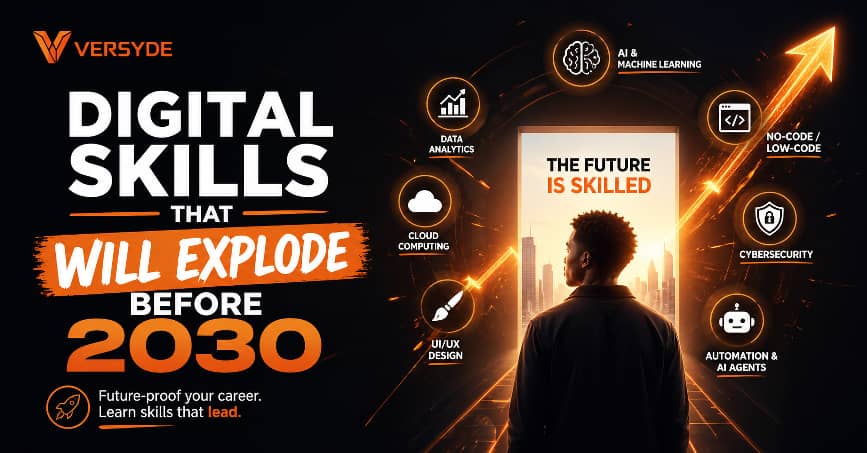
    Digital Skills That Will Explode Before 2030

    Digital Skills That Will Explode Before 2030 | Future of Work

    The internet is entering another shift. A brutal one.

    The people who adapt early will build leverage, income, influence, and opportunities at a scale most people still underestimate.

    The people who don’t? They’ll slowly become digitally invisible.

    Here’s the uncomfortable truth: A lot of today’s “safe” skills will become heavily automated, oversaturated, or devalued before 2030. Not because humans are useless. But because average work is becoming replaceable. AI is removing friction from execution.

    Which means the future belongs to people who can: think strategically, communicate clearly, build systems, create trust, combine skills, and adapt faster than everyone else.

    This is not fear-mongering. This is positioning.

    If you’re building a career, business, brand, or digital presence right now, these are some of the digital skills that are likely to explode before 2030.

    1
    AI Workflow & Automation Skills

    The biggest opportunity is not “using AI.” It’s building systems with AI. Businesses don’t just need people who can type prompts into chatbots. They need people who can: automate repetitive work, improve operations, connect tools together, reduce costs, and increase productivity.

    The winners will be people who understand: AI workflows, automations, integrations, and operational efficiency.

    Tools Worth Learning

    ChatGPT Claude Make Zapier n8n Notion AI
    Harsh Reality: Most people are using AI for entertainment. A small percentage are using it to build leverage. That gap will create massive income differences.
    2
    Content Strategy

    Content creation alone is becoming commoditized. Strategy is becoming premium. Anyone can now generate captions, graphics, blogs, videos, and designs with AI tools. But very few people understand positioning, audience psychology, storytelling, distribution, and attention engineering.

    That’s the difference. The future belongs to people who know how to make content actually move people.

    Why This Matters: Every company is becoming a media company. Attention is the new currency.
    3
    Personal Branding

    Before 2030, your online presence may matter more than your CV. People increasingly trust visible proof, online reputation, consistency, authority, and digital identity. Personal branding is no longer vanity. It’s infrastructure.

    Opportunities now come through LinkedIn posts, X/Twitter threads, online communities, newsletters, podcasts, and creator ecosystems.

    Harsh Reality: Many talented people stay invisible because they refuse to be seen. Visibility compounds. Silence doesn’t.
    4
    Video Production & Short-Form Storytelling

    Video is dominating the internet. And short-form content changed how humans consume information. Brands are aggressively investing in TikTok, Reels, YouTube Shorts, video ads, podcasts, and creator-led media.

    The people who understand retention, hooks, editing, pacing, and emotional storytelling will stay valuable.

    Important Shift: Editing alone is not enough anymore. Storytelling is becoming the real currency.
    5
    UI/UX & Digital Product Thinking

    The world is becoming interface-driven. Apps. Platforms. Dashboards. Digital ecosystems. Businesses need people who understand how humans interact with technology. That includes user psychology, product design, usability, and experience optimization.

    The Future: AI may generate layouts. But understanding human behavior remains difficult to automate.
    6
    Community Building

    Communities are becoming more powerful than audiences. A loyal community can outperform massive followers, expensive ads, and traditional marketing. Why? Because people crave belonging, identity, trust, and interaction. This is why community-focused brands are exploding.

    Skills That Matter Here

    • Engagement
    • Moderation
    • Communication
    • Culture-building
    • Conflict management
    • Retention systems
    Harsh Reality: Most brands talk at people. Very few know how to build with people.
    7
    Data Analysis & Insight Interpretation

    Data is useless without interpretation. Companies are drowning in dashboards but starving for clarity. The people who can analyze trends, interpret behavior, identify opportunities, and simplify complexity will become increasingly valuable.

    Important Note: This is not just about coding. It’s about decision-making. Businesses pay heavily for clarity.
    8
    Cybersecurity

    As the world becomes more digital, attacks increase. Simple. Businesses, governments, startups, creators, and platforms all need protection. Cybersecurity demand will continue rising because digital trust matters more than ever.

    Areas Growing Fast

    • Ethical hacking
    • Cloud security
    • Digital protection
    • Identity systems
    • Security operations
    Harsh Reality: Most people ignore cybersecurity until disaster happens. That will change fast.
    9
    Digital Sales & Persuasion

    Technology evolves. Human psychology barely changes. People who know how to communicate value, influence decisions, build trust, and close deals will always have leverage. Sales is one of the most future-proof skills on earth. Especially online sales.

    This Includes

    • Copywriting
    • Brand messaging
    • Funnel strategy
    • Email marketing
    • Offer positioning
    Harsh Reality: A lot of businesses fail because they cannot communicate value clearly. Not because their product is bad.
    10
    Creator Entrepreneurship

    The line between creator and entrepreneur is disappearing. Creators are no longer just influencers. They’re building brands, communities, products, software, courses, agencies, and media ecosystems. This shift is massive.

    The future internet economy will heavily reward creators with ownership, niche authority, and loyal audiences.

    Important Reality: Followers alone are useless. Ownership matters more.
    11
    No-Code & Low-Code Development

    Building software is becoming more accessible. You no longer need to become a hardcore engineer before launching digital products. No-code tools are helping people build websites, MVPs, automations, internal systems, and startups faster.

    Tools Worth Exploring

    Bubble Framer Webflow Glide Softr
    Harsh Reality: Execution speed is becoming a competitive advantage. The people who can build quickly will dominate experimentation.
    12
    Research & Information Curation

    Information overload is becoming a serious problem. People don’t just need information anymore. They need filtered insight, contextual understanding, and trusted guidance. That’s why newsletters, research brands, curated communities, and educational creators are growing rapidly.

    Why This Matters: Curators may become as valuable as creators. Because attention is limited.
    13
    Strategic Communication

    Clear communication is becoming a superpower. Especially in remote work, leadership, online business, partnerships, and digital collaboration. People who can explain ideas clearly will always outperform equally skilled people who communicate poorly.

    This Includes

    • Writing
    • Public speaking
    • Storytelling
    • Negotiation
    • Online communication
    Harsh Reality: A lot of opportunities are lost through weak communication. Not weak talent.
    14
    Adaptive Learning

    This may become the most important skill of all. Technology is evolving too fast for static knowledge. The people who thrive before 2030 will be people who can learn quickly, unlearn outdated systems, adapt rapidly, and reinvent themselves repeatedly.

    Reality Check: The future does not belong to the people who know the most. It belongs to the people who can evolve the fastest.

    So What Should You Do Right Now?

    Stop chasing random trends blindly.

    Start building: depth, leverage, adaptability, and visible proof of skill.

    Pick one skill. Go deep. Stack complementary skills around it.

    For example:

    Video editing + storytelling. AI + automation. Design + branding. Writing + strategy. Community + marketing.

    Skill stacking is where unfair advantage is built.

    The next few years will create new millionaires, new industries, new careers, and entirely new ways of working.

    But they will also expose people who refused to adapt.

    The internet rewards relevance. And relevance now moves fast.

    You do not need to predict the future perfectly.

    You just need to position yourself early enough to benefit from where the world is heading.

  • 15 Remote Jobs Africans Can Start Without a Degree

    15 Remote Jobs Africans Can Start Without a Degree

    15 Remote Jobs Africans Can Start Without a Degree | Future of Work The old system is breaking. A degree is no longer the gatekeeper to income, opportunity, or relevance online. Thousands of Africans are building global careers from their phones and laptops — not because of certificates, but because of digital skills and execution.

    The internet changed the rules. Companies care less about where you studied and more about what you can do, how fast you can learn, and whether you can solve problems. The barrier is lower than ever — but competition is higher. This is not another “easy money” article. Remote work rewards execution, not motivation quotes. If you’re willing to learn, adapt, and stay consistent, these remote jobs can be yours.
    1
    Social Media Manager
    Businesses are desperate for attention. Most brands know they need social media, but they have no idea how to consistently create content, manage engagement, or grow online communities. That’s where social media managers come in. Your job could involve: content planning, posting, engagement, analytics, community management, trend research, and strategy. This is one of the most accessible remote careers because you can learn while practicing on your own pages.
    Content strategy Communication Canva/design basics Copywriting Trend awareness
    Best platforms: LinkedIn, Upwork, Fiverr, X/Twitter, Facebook groups
    2
    Graphic Designer
    Visual communication is everywhere. Brands constantly need logos, social media graphics, presentations, ads, thumbnails, UI assets, and marketing materials. The mistake many beginners make is trying to master everything at once. Don’t. Start with one niche: social media design, thumbnail design, brand identity, or presentation design.
    Canva Adobe Photoshop Illustrator Figma
    Tools: Canva, Photoshop, Illustrator, Figma
    3
    Video Editor
    Short-form content exploded. Now every brand, creator, startup, coach, and business wants video. Good editors are becoming more valuable than ever. Especially editors who understand storytelling, pacing, retention, and internet culture.
    CapCut Premiere Pro DaVinci Resolve
    High-demand areas: TikTok edits, YouTube videos, Podcast clips, Reels/Shorts, Ad creatives
    4
    Virtual Assistant (VA)
    This is one of the fastest entry points into remote work. Virtual assistants help businesses with operational tasks like scheduling, email management, research, customer support, data entry, and organization. It may sound simple, but reliable VAs are rare.
    Communication Organization Google Workspace Time management
    Note: Specialized VAs (executive assistants, marketing VAs, tech VAs) are in higher demand.
    5
    Content Writer / Copywriter
    Every business needs words. Websites, blogs, ads, emails, captions, scripts, landing pages — all require writing. Two paths: Content writing (educational/informational) and Copywriting (persuasion). Both can become highly profitable.
    Storytelling Research SEO basics Persuasion
    Note: Writers who are insightful, strategic, and human will always stand out.
    6
    UI/UX Designer
    Tech startups are growing rapidly across Africa and globally. Every digital product needs user experience design. UI/UX designers help make apps and websites usable, intuitive, and visually clean.
    Figma Framer Adobe XD
    Note: The real skill is solving user problems, not just creating pretty screens.
    7
    Web Developer
    One of the highest leverage skills online. Developers build websites, platforms, dashboards, SaaS products, and digital systems. Paths: Frontend, Backend, Full-stack, No-code development.
    HTML/CSS JavaScript React Node.js
    Note: Best learning platforms: freeCodeCamp, YouTube, The Odin Project
    8
    Community Manager
    Online communities are becoming modern digital cities. Brands need people who can engage members, manage conversations, retain users, and create belonging. This role is growing fast in Web3, startups, creator brands, and education platforms.
    Moderation Empathy Communication
    Note: Community management involves managing people, culture, psychology, and trust.
    9
    SEO Specialist
    Most websites are invisible. SEO specialists help businesses rank on search engines and get organic traffic. This includes keyword research, content optimization, technical SEO, and search strategy.
    Keyword research Analytics Technical SEO
    Note: Strategic SEO is becoming more important as AI search evolves.
    10
    Email Marketer
    Email is still one of the highest-converting marketing channels online. Businesses need people who can write campaigns, automate sequences, improve open rates, and increase conversions.
    Mailchimp ConvertKit Brevo Klaviyo
    Note: Good email marketers understand human behavior and timing.
    11
    Online Tutor
    You don’t need to be a professor to teach online. If you have skill in English, tech, design, business, academics, or digital skills, you can monetize teaching via 1-on-1 coaching, group classes, digital workshops, or recorded courses.
    Clarity Patience Subject expertise
    Note: Knowing something is different from explaining it well.
    12
    Customer Support Representative
    Remote customer support is growing globally. Many companies hire remote agents to respond to users, solve issues, manage tickets, and maintain customer satisfaction.
    Communication Patience Problem-solving
    Note: Emotional resilience and clear boundaries matter in this role.
    13
    Data Analyst
    Businesses are drowning in data but starving for insight. Data analysts help companies interpret information and make smarter decisions.
    Excel Google Sheets SQL Power BI Tableau
    Note: The real value is turning numbers into actionable decisions.
    14
    AI Prompt Specialist
    Yes, this is now a real thing. Businesses increasingly need people who know how to use AI tools effectively, automate workflows, generate better outputs, and integrate AI into operations.
    Critical thinking Research Workflow systems AI tool knowledge
    Note: Real value comes from solving actual business problems with AI.
    15
    Digital Product Creator
    Some people stop selling time and start selling assets. Digital products include ebooks, templates, guides, presets, prompts, systems, courses, and toolkits. This is one of the most scalable remote income paths.
    Niche understanding Marketing System design
    Note: People pay for outcomes, not just information.

    The Biggest Advantage Africans Have Right Now

    Hunger. Adaptability. Resourcefulness. A lot of people in developed countries became comfortable. Africans entering the digital economy are often more resilient, experimental, and willing to learn aggressively. That matters.

    But there’s also a harsh truth: The global market does not care about your excuses. Clients care about reliability, communication, speed, quality, and results. Your location is no longer the biggest barrier — your skill level and positioning are.

    You do not need permission to start building online anymore.

    You need: internet access, consistency, proof of work, and patience. Start small. Learn deeply. Build publicly. Improve constantly.

    The people winning online are not always the smartest. They’re usually the ones who stayed long enough to become undeniable.

    Start your remote journey